
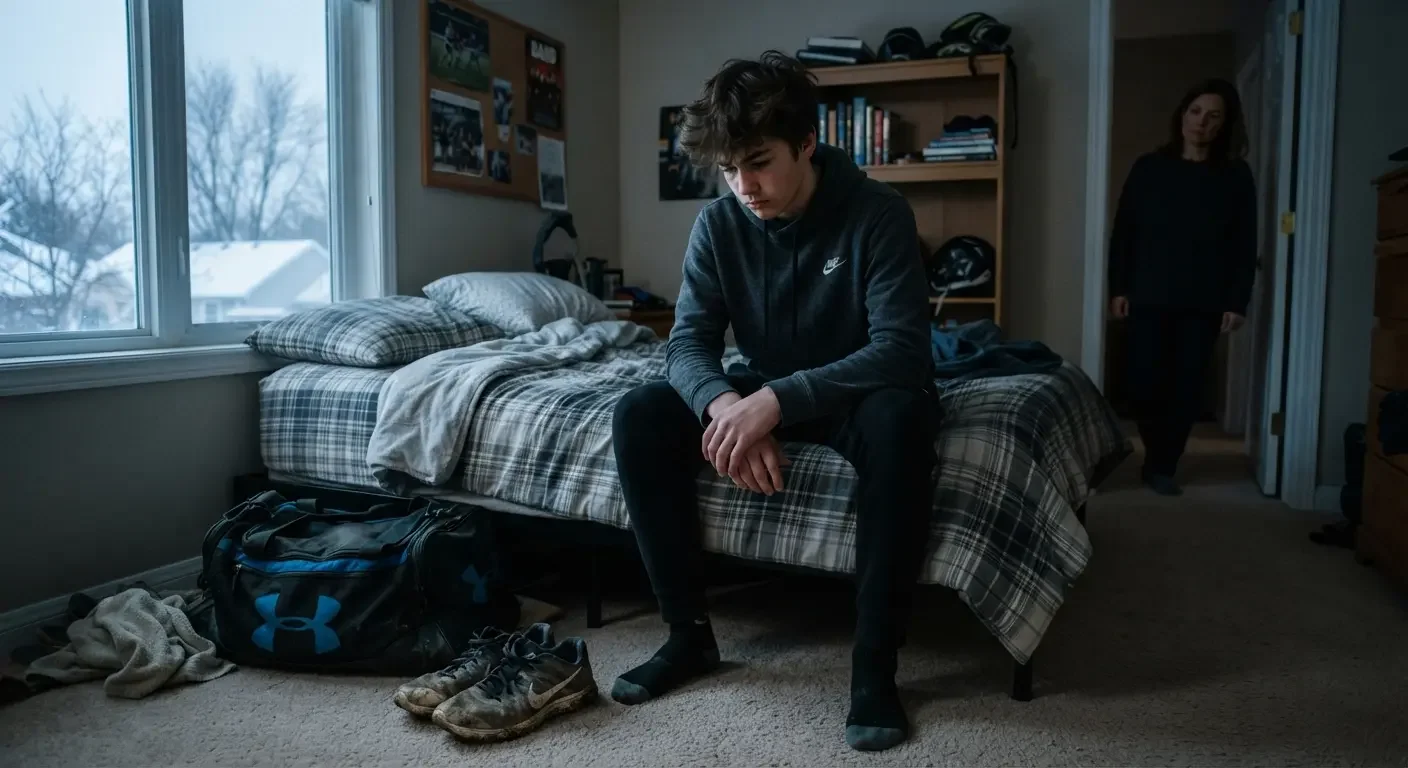
If you have a student-athlete at home, you have probably seen some version of this. The days get shorter, practice moves indoors, and the kid who loved everything about their sport suddenly seems tired all the time. They want to stay in bed on Saturdays. They snap at a younger sibling over nothing and then go quiet. You figure it is just the season, and most of the time you are probably right.
But sometimes a winter slump is more than a slump. Seasonal depression is real, and early on it can look a lot like a busy, worn-out teenager. This post will help you tell the difference, figure out what to say, and recognize when it is time to bring in a professional.
What a normal winter slump looks like
A winter slump is a common, fairly mild dip in mood and energy. An athlete with a normal slump might be more tired than usual, less excited about practice, and happy to stay in on a Friday night. The key is that they bounce back. Their friends still matter to them, they still enjoy a good meal or a game on TV, and they feel more like themselves once the days get longer or the schedule loosens up. Winter is also a heavy stretch for many athletes, with indoor training, exams, recruiting calls, and the off-season grind all landing at once.
Seasonal depression symptoms to watch for
Seasonal affective disorder, often called SAD, is a form of depression that follows a seasonal pattern. The Mayo Clinic overview of seasonal affective disorder explains that for most people, symptoms begin in late fall or early winter and ease up in the sunnier days of spring and summer.
The signs that point toward depression include a low mood that hangs on most of the day, nearly every day. Your athlete may lose interest in things they used to love, feel hopeless, get irritable, or struggle to concentrate. Sleep and appetite often change. Some kids sleep far more than usual and eat more, while others lose their appetite and sleep poorly. Watch for a drop in performance that does not improve even though they are still working hard, and for a pattern of pulling away from teammates and family. Two weeks or more of these changes is a good reason to look more closely.
Seasonal depression in teens and children
This is where the research gets less tidy. Some sources say SAD is less common before age 20, and many detailed descriptions are based on adults. Still, depression in young people is common enough that a clear, repeating winter pattern deserves a real evaluation. Seasonal affective disorder in teenagers is harder to spot because irritability, sleep changes, and a short fuse are also part of normal adolescence. Seasonal affective disorder in children can look different. A younger kid might say their stomach hurts before games or that they do not want to go to practice. Watch behavior, not just words.
Keep bipolar disorder in mind too. It can look a lot like seasonal depression, so a clinician needs to rule it out. If your athlete has had stretches of unusually high energy, very little sleep without feeling tired, or risky behavior, tell the provider. It changes which treatments fit.
Signs of seasonal depression in teens at home and at practice
At home, notice whether your athlete has stopped joining family dinners, keeps odd sleep hours, or skips meals. At practice, watch for a coach who mentions a change, an athlete who seems flat or distracted, or more frequent minor injuries. Coaches and athletic trainers often notice changes before parents do, so a friendly check-in with them can help. Try not to judge the whole season by one bad week. A tough loss is not a diagnosis.
How to start the conversation
Pick a calm moment, like a drive to school or a walk around the block, when nobody is in a rush. Timing matters more than most parents expect. Talking right after a hard practice or a tough game usually goes worse than talking when your athlete has eaten, rested, and has some sense of control over the day. Start with something specific and kind instead of a big open question. "You seem pretty worn out lately, and I wanted to check in" gives them room to answer without feeling put on the spot.
Then listen more than you talk. Teens often open up in short bursts, so let the quiet sit. Avoid lines that shut the door, like, "You have nothing to be sad about" or "Just snap out of it." Those comments feel dismissive even when you mean well. Try something closer to, "That sounds really hard. Do you want help figuring it out, or do you just need me to listen right now?" If you plan to talk with their doctor or coach, tell your athlete first so they do not feel reported on behind their back.
When to bring in a professional
If low mood, pulling away, or changes in sleep or appetite have lasted two weeks or more, or they are getting worse, it is time to talk with a professional. You do not need to wait for a crisis. A pediatrician or family doctor is a good first call, since they can check for medical causes like thyroid problems or anemia. A licensed therapist can work on the emotional side. If you are not sure whether what you are seeing is serious, a single consultation can answer the question and take a lot of the guesswork out of it.
Treatment often combines a few tools, such as light therapy, psychotherapy like cognitive behavioral therapy, and in some cases medication. Starting before symptoms usually show up each year can make a real difference, so planning ahead helps.
Therapy does not have to be only for the athlete. Sometimes the whole household needs help with communication and with how to respond when a kid is struggling. Family therapy gives everyone a place to talk, and psychotherapy can focus on what your athlete is facing. Christine, a former NCAA Division I athlete and Licensed Clinical Social Worker, works with young people starting at age 10 and also supports parents. You can read more on the about page or check accepted plans on the insurance and payment page. Sessions are offered in person or by telehealth.
What to do in a crisis
If your child is struggling, seems very distressed, or talks about hurting themselves, don’t wait for the next appointment. Contact their doctor or mental health provider right away. If your athlete is in immediate danger, call your local emergency number and stay with them. Keep medications, alcohol, and anything sharp out of easy reach.
Need help? Contact us or call (508) 274-1216.
Winter does not have to be something you just get through with your jaw clenched. Many young athletes come out of a rough stretch with a clearer sense of who they are, especially when the adults around them respond early and with patience. Watch the pattern, keep the conversation open, and ask for help when you need it.
If you want more reading, the blog has a post on how parents can support an anxious young athlete, one on the hidden pressure student athletes carry, and one on stress, burnout, and anxiety in young athletes. When you are ready to talk with someone, the contact page is the easiest place to start.