
Stress, Burnout, and Anxiety in Young Athletes: A Massachusetts Therapist Explains
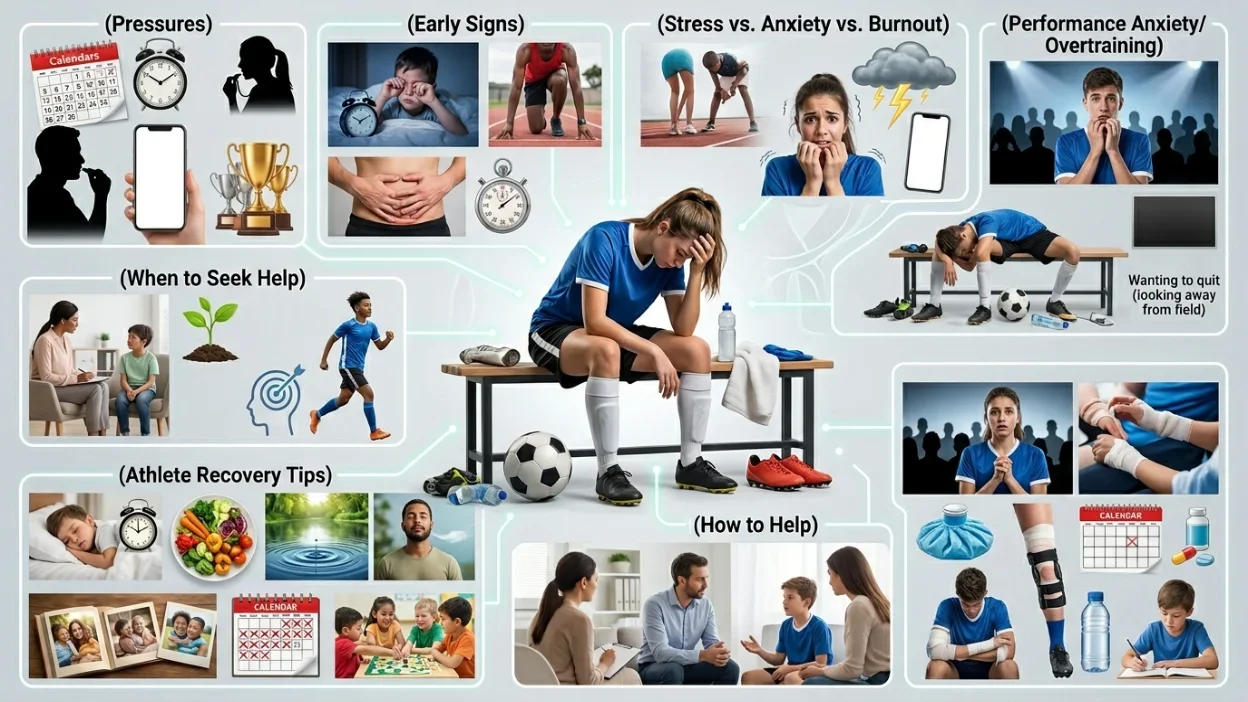
Youth sports can be one of the most rewarding experiences in a child’s life. The teamwork, discipline, and sense of achievement that come with athletic training are genuinely valuable. But there is a side to youth sports that many parents and coaches don’t talk about enough: the mental and emotional toll it can take on young athletes.
If your child has started dreading practice, lost sleep before a game, or seems exhausted even when they haven’t been pushing that hard physically, you may already be seeing early warning signs. As a licensed therapist in Massachusetts who works with young people and families, I see this pattern regularly, and the good news is that it is entirely possible to turn things around with the right support.
This article walks you through everything you need to know about stress management for young athletes, from recognizing the early signs to taking practical steps that actually work.
Why Young Athletes Are Under More Pressure Than Ever
The world of youth sports has changed dramatically over the past two decades. What used to be a casual after-school activity has turned into year-round training schedules, travel teams, recruiting pressure, and social media highlight reels that make every young athlete feel like they need to perform at a professional level.
According to research published by the American Academy of Pediatrics, around 70% of children who participate in organized sports quit by age 13 and psychological burnout is one of the leading reasons. That is a staggering statistic, and it tells us something important: the problem is not that these kids lack talent or dedication. The problem is often that we are asking too much of them, too early.
The pressure does not come from one place. It builds up from multiple directions at once:
Coaches who prioritize winning over development
Parents who link the child’s athletic performance to their own pride or hopes
School schedules that leave little time for rest or free play
The child’s own perfectionism and fear of letting others down
When all of these pile on at once, it creates the perfect environment for stress, anxiety, and eventually burnout.
Understanding the Difference: Stress vs. Anxiety vs. Burnout
These three words are often used interchangeably, but they describe different experiences. Understanding the difference helps you respond in the right way.
Stress
Stress is a normal short-term response to a challenging situation. A big game coming up, a difficult practice, a rivalry match — all of these create stress. In small doses, stress actually improves performance. The problem starts when stress becomes chronic and there is no recovery time built in.
Sports Anxiety in Teenagers
Sports anxiety in teenagers goes deeper. It is not just nerves before a game. It is a persistent pattern of worry, fear of failure, or dread that starts affecting the athlete’s behavior and mood even outside of sports. A teenager with sports anxiety might spend hours lying awake before competition, avoid social contact with teammates, or physically feel sick at the thought of playing.
Anxiety can show up in subtle ways that are easy to miss. Watch for changes in sleep, appetite, withdrawal from friends, increased irritability, or frequent physical complaints like headaches and stomachaches with no clear medical cause.
Burnout
Burnout is what happens when the demands of sports have outpaced the athlete’s capacity to cope over a sustained period. The young athlete burnout signs most commonly seen include:
Emotional exhaustion: The athlete seems flat, disengaged, or emotionally distant from the sport
Devaluation: They start saying things like “I don’t care anymore” or “What’s the point?”
Reduced sense of accomplishment: Even when they perform well, they feel like it was not good enough
Physical fatigue that does not go away: Tired even after rest days or a lighter training week
Wanting to quit: Persistent and serious talk about dropping the sport entirely
If you recognize several of these in your child, it is worth taking seriously. Burnout does not fix itself with a week off. It needs a more thoughtful response and often, professional support.
For personalized guidance, reach out to our practice to speak with a licensed clinician who works with young athletes.
Performance Anxiety in Youth Sports: What It Looks Like
Performance anxiety youth sports is one of the most common issues I see in my clinical work. It tends to spike around competition tournaments, tryouts, big games but in more severe cases, it can be present even during regular practice.
Here is what it can look like in real life:
A 14-year-old who plays brilliantly in practice but freezes during games
A teenage swimmer who has panic attacks before meets
A young soccer player who fakes injuries to avoid playing when the stakes feel too high
A high school athlete who develops a pre-game ritual so rigid that any disruption causes a complete meltdown
Performance anxiety is not a character flaw or a sign of weakness. It is the nervous system responding to perceived threat. The brain does not always know the difference between a real danger and the fear of losing a match it responds the same way either way.
The patterns behind performance anxiety are often rooted in how the athlete has learned to measure their self-worth. If their value as a person has become tied to how well they perform on the field, every competition becomes an existential threat.
Cognitive Behavioral Therapy (CBT) and mindfulness-based approaches are highly effective for this. You can learn more about our therapy services for children and adolescents on our website.
Overtraining Syndrome in Teen Athletes: The Physical Side of Burnout
Not all of the damage from pushing too hard shows up emotionally first. Overtraining syndrome in teen athletes is a recognized medical condition that occurs when the volume and intensity of training exceeds the athlete’s capacity to recover.
The signs include:
Persistent muscle soreness and fatigue that does not improve with rest
Declining athletic performance despite consistent training
Mood changes including irritability, sadness, or loss of motivation
Increased susceptibility to illness and injury
Sleep disturbances
Loss of appetite
What makes overtraining syndrome particularly tricky is that the athlete and their coaches may interpret declining performance as a need to train harder which makes the problem worse. If you suspect your child may be overtrained, the first step is rest. The second step is a conversation with both their doctor and a mental health professional.
The mind and body are deeply connected. When one is struggling, the other follows. An athlete who is physically overtrained will almost always be emotionally depleted too.
Signs of Anxiety in Child Athletes: A Parents’ Guide
If you are a parent trying to figure out whether your child is simply going through a rough patch or dealing with something more serious, this section is for you. The signs of anxiety in child athletes parents guide that I share with families in my practice is built around observation rather than diagnosis. You do not need to label what your child is experiencing you just need to notice and respond.
Behavioral Signs
Avoiding practice or making frequent excuses not to go
Becoming unusually quiet or withdrawn before games
Excessive reassurance-seeking (“Am I playing well? Does the coach like me?”)
Difficulty concentrating at school or home after a poor performance
Social withdrawal from teammates
Physical Signs
Stomachaches or headaches that seem linked to game days
Difficulty sleeping the night before competition
Trembling, rapid heartbeat, or sweating before games
Fatigue that seems disproportionate to the training load
Emotional Signs
Excessive self-criticism after mistakes
Crying or emotional outbursts after losses that seem out of proportion
Saying things like “I’m not good enough” or “I always mess up”
Loss of enjoyment that used to be there
If these signs are showing up regularly and affecting your child’s daily life, it is time to seek support. A youth sports mental health therapist can assess what is happening and work with your child in a way that is both evidence-based and developmentally appropriate.
Our team works with young athletes across Massachusetts. You can explore our approach to adolescent mental health to understand how we help.
Frequently Asked Questions (FAQs)
-
A temporary slump usually resolves within a week or two and tends to be connected to a specific event like a bad game or a conflict with a teammate. Burnout is more persistent, affects multiple areas of life (not just sports), and often includes emotional withdrawal and loss of enjoyment. If your child has been struggling for more than three to four weeks with no clear improvement, it is worth seeking a professional assessment.
-
Yes, absolutely. Many athletes recover from burnout and go on to have long, healthy athletic careers. The key is taking the recovery process seriously rather than rushing back to full training. Recovery looks different for every athlete, but rest, identity work, and mental skills development are consistently important parts of it.
-
Not necessarily. Sports anxiety can be specific to the athletic context without meeting the clinical threshold for a diagnosable anxiety disorder. However, for some young athletes, the anxiety in sports is a reflection of a broader anxiety pattern that affects other areas of their life too. A proper assessment with a licensed therapist can clarify what is happening and what kind of support is most appropriate.
-
It depends on the severity. For mild burnout, adjusting the schedule, reducing training intensity, and adding recovery strategies may be enough. For more serious burnout or when anxiety and depression are present, a break from the sport may be necessary and therapeutic. This is not a failure it is a smart, strategic move that protects the athlete’s long-term health and athletic future.
-
Therapy provides a confidential space where the young athlete can talk honestly about their experience without fear of judgment or consequences for the team. Evidence-based approaches like CBT help athletes identify and challenge the thought patterns driving anxiety. Sport-focused therapy also teaches practical mental skills like goal-setting, self-talk reframing, and pre-competition routines. As a Massachusetts sports therapist for kids, I tailor the work to the specific sport, age, and personality of each athlete I work with.
-
Coaching style has a significant impact on athlete mental health. Research consistently shows that controlling, critical, or fear-based coaching increases anxiety and reduces intrinsic motivation. If your child’s coach is creating a punitive environment, it is worth having a respectful but direct conversation with the coach or exploring other programs.
-
Our practice specializes in working with young athletes and their families across Massachusetts. We offer both in-person and telehealth sessions, and we work collaboratively with parents, schools, and coaches when appropriate. You can learn more about our services or get in touch to book a consultation.