
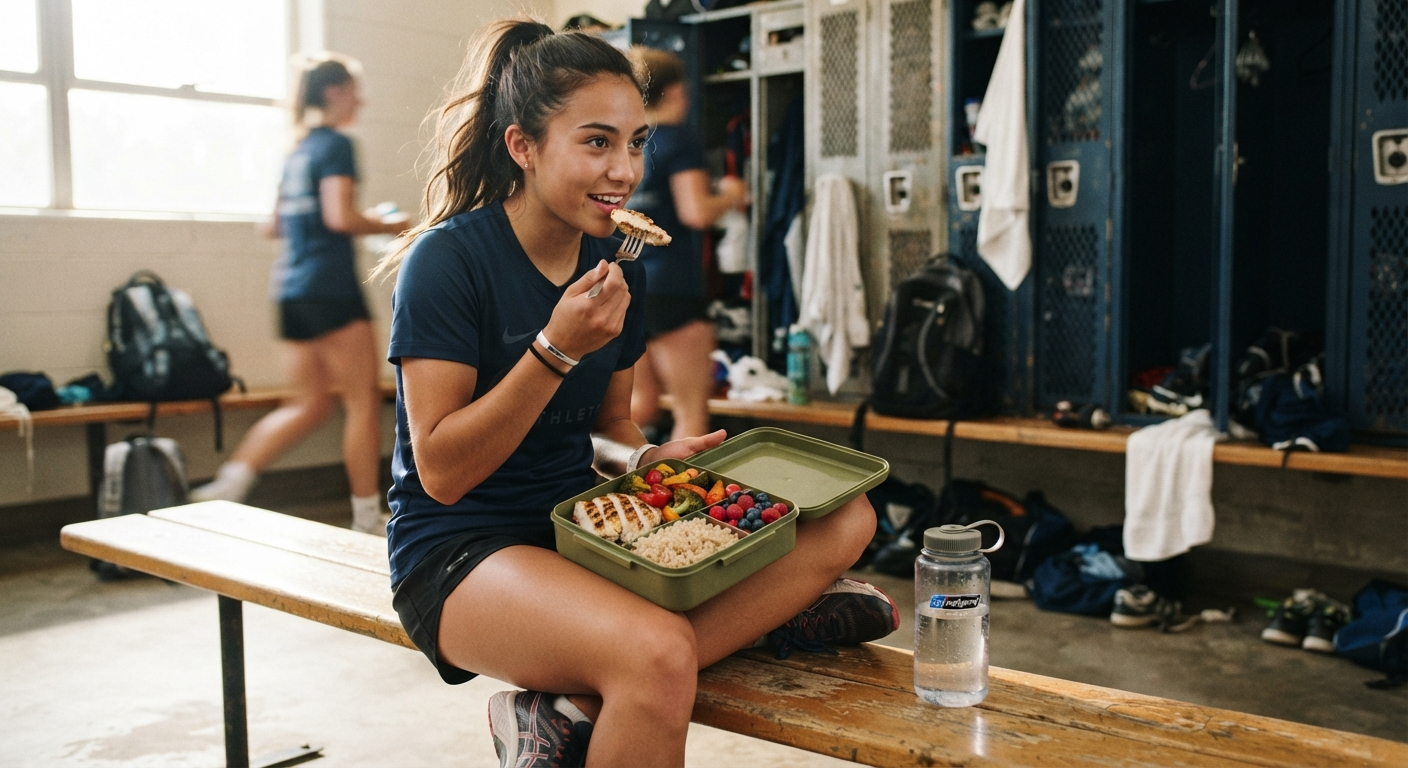
Most of the talk after a rough game is about technique. The footwork was off, the shot was rushed, the defense got lazy. Almost nobody asks what the athlete ate that morning or whether they ate lunch at all. That is a missed opportunity, because athlete nutrition affects far more than muscles. How an athlete fuels their body shapes their energy, mood, focus, and even how confident they feel when they step onto the field.
This post looks at the mental side of fueling for athletes, parents, and coaches. It is not a meal plan, and it does not replace advice from a registered dietitian. Think of it as a practical starting point with some better questions to ask.
How fueling affects the mind
Your brain is a hungry organ. It works best when it gets a steady supply of energy across the day. When an athlete goes long stretches without eating, or fills up on sugar and not much else, they can feel shaky, foggy, or short-tempered partway through practice. Many athletes never connect that crash to lunch. They just decide they are having a bad day.
Research supports the link between under-eating and mood. A narrative review written by a subgroup of the group behind the International Olympic Committee's consensus on Relative Energy Deficiency in Sport (RED-S) found that early warning signs of not eating enough for training include mood changes, fatigue, and psychological distress. More serious effects can include anxiety and depressive symptoms. That review looked at athletes in general, so it does not mean every tired kid is under-fueled. It does mean that food and mood are tied together in ways worth paying attention to.
Energy, mood, and focus are connected
Nutrition and sports performance are closely linked, and good fueling for sports comes down to three parts. The first is the total amount of food across the whole day, not just one big meal. The second is timing, meaning how meals and snacks are spaced so training does not start on an empty tank. The third is recovery, which is eating and drinking after practice so the next day starts strong.
When one of those pieces slips, focus usually goes first. A player who skipped breakfast may lose track of the ball in the second half. A swimmer who did not drink enough the day before may feel every lap harder than usual, and that can turn a normal workout into a mental battle. Hydration matters more than many people realize. The joint position paper from the Academy of Nutrition and Dietetics, Dietitians of Canada, and the American College of Sports Medicine notes that dehydration can raise the feeling of effort and hurt performance.
Confidence starts before the game
Confidence gets talked about like it lives only in the head, but routines and preparation feed it. An athlete who knows what they will eat before a game, has a water bottle ready, and follows a simple warm-up walks onto the field with fewer questions. Less uncertainty about the basics leaves more room to focus on the game itself.
That is where the mental game and fueling meet. A pre-game routine is partly a nutrition plan and partly a mental skill. Practice it in training, not for the first time at a big meet. Let your athlete try different foods on normal training days and notice how they feel. Some kids find that a big meal an hour before competition makes them sluggish or nervous, while a smaller snack feels better. These small experiments build trust in their own body, and that trust carries over into competition.
How to properly fuel your body
Fuel for your body is not one size fits all. A distance runner, a gymnast, a hockey goalie, and a middle linebacker have very different needs. Age, growth, sport, training load, and school schedules all matter. Athletes who are still growing often have higher needs, and those needs can shift from one season to the next.
Food preferences, budget, cultural traditions, and allergies matter too. The best plan is one an athlete can actually follow. A diet that looks perfect on paper but falls apart at a busy family dinner will not last. A good starting point is an honest look at what an athlete eats on a normal school day, not what they think they should be eating. The position paper recommends individualized plans and says athletes should be referred to a registered dietitian for a personalized nutrition plan. A sports dietitian with the Certified Specialist in Sports Dietetics credential has extra training in this area.
Warning signs that fueling has become a problem
Most athletes who struggle with food do not have one dramatic problem. They have small patterns that add up. Watch for regularly skipping meals, saying they are not hungry before practice again and again, eating in secret, rigid food rules, or talk about needing to burn off what they ate. Physical signs can include fatigue that does not improve with rest, frequent illness or injuries, and trouble sleeping. For female athletes, changes in their menstrual cycle are also worth raising with a doctor.
Mood matters here too. Sudden irritability, pulling away from teammates, or a flat mood that lasts for weeks can mean the body is not getting enough fuel, or that something emotional is going on. If you see these signs, do not wait for a perfect moment. Talk with your athlete, their parents or their doctor, and consider a mental health clinician who works with eating concerns. Christine's psychotherapy practice includes support for eating disorders and body image issues, and a therapist who knows these issues can help you plan next steps.
Building the right team around the athlete
Good performance support works best as a team. A registered dietitian, ideally one with sports nutrition training, can answer questions about meals, timing, and fluids. A mental performance coach can work on focus, confidence, pre-game routines, and the self-talk that shapes how an athlete handles pressure. A doctor or athletic trainer can check for physical signs that food or training load is out of balance.
Coaches have a big role, too. They can talk about fueling as part of training rather than as a punishment or a way to change body size. Simple team habits, like a healthy snack after practice and reminders to drink water on hot days, go a long way. Coaches who want more structure can look at athletic consulting services, which cover mental wellness education for teams and athletic departments. Athletes who want to build mental skills can explore coaching services, which focus on confidence, resilience, and balance in sport and life.
Putting it together
Fueling the mental game comes down to a few habits. Eat regularly, drink enough water, plan meals around training and competition, practice your routines, and pay attention when mood, energy, or focus starts to slide. None of this is complicated. What makes it work is consistency and a team that talks openly about it. Small changes that stick usually beat a big overhaul that lasts two weeks.
If you are a parent, start with curiosity instead of criticism. If you are a coach, make fueling properly for your sport part of the normal conversation. If you are an athlete, notice how you feel after different meals and tell someone when something seems off. Your body gives you information all the time, and you deserve help reading it.
If performance pressure is weighing on your athlete, our post on 5 signs an athlete may be struggling with performance anxiety is a good next read. Coaches may also find Be Positive, Not Punitive helpful. You can reach out through the contact page with questions about therapy or coaching.