
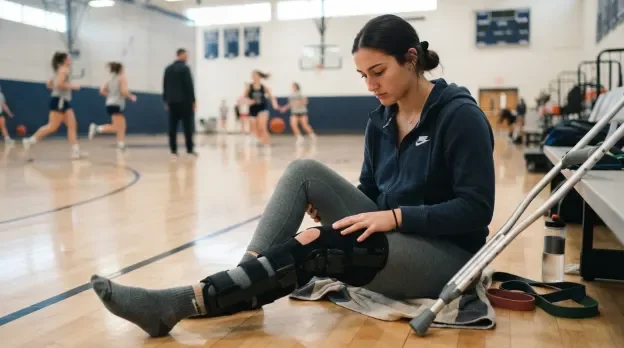
It often happens in a split second. A soccer player cuts hard to one side, her foot stays planted, and her knee suddenly gives way. Many athletes remember that moment clearly. Then comes the diagnosis, and often a long stretch away from the game they love.
An ACL injury is serious, and the physical side gets most of the attention. For many female athletes, though, the emotional side lingers long after the swelling goes down. Athlete mental health deserves the same care as the knee.
What the Research Says About ACL Injuries
Let's start with the numbers. A 2025 meta-analysis of adolescent athletes found that girls had an ACL injury risk roughly 1.5 times higher than boys. Soccer stood out as the sport with the highest risk for female athletes.
Is the ACL the most common injury in women's soccer? Not quite. A large study of 15 elite women's teams in Europe, followed across four seasons, found that thigh muscle injuries were the most common, mostly hamstrings and quadriceps. ACL tears made up a much smaller share of injuries, but they caused the greatest time loss. Players who tore an ACL missed a median of 292 days, close to ten months. So the more accurate statement is that ACL tears are not the most frequent injury in women's soccer, but they are among the most serious and time-consuming.
Why the gap? Researchers don't have one clear answer. A 2019 meta-analysis by Montalvo and colleagues found that female athletes had higher ACL injury risk than male athletes in several sports, though the size of the gap varied. Researchers point to a mix of factors, including anatomy, hormones, and how the body controls movement.
Most ACL injuries in sport happen without contact. In the UEFA women's study, the most common mechanism for these non-contact tears was twisting or turning, followed by jumping and landing. In a study of 205 female athletes in soccer, basketball, and volleyball, Hewett and colleagues (2005) found that those who later tore an ACL landed with their knee angled about 8 degrees further inward at first contact. When the knee collapses inward, which researchers call dynamic knee valgus, the ligament takes on more strain. Hip and trunk control matter too.
The good news is that these patterns can be trained. Neuromuscular training programs, which combine strength work, balance, jump training, and coaching on landing, have been shown to reduce ACL injury risk in young female athletes. A 2019 review of 18 studies, with more than 27,000 young athletes, found that neuromuscular training lowered the risk of ACL injury from about 1 in 54 to about 1 in 111. A 2015 meta-analysis by Sugimoto and colleagues found that strengthening, hip and trunk control exercises, and programs with several types of exercise added the most benefit.
The effects of hormonal changes impacting knee laxity research is still inconclusive. A 2017 systematic review by Herzberg and colleagues found that knee laxity may increase around the ovulation phase of the menstrual cycle, and some studies suggested hormonal birth control may lower injury risk. The authors, however, rated the overall quality of evidence as low. A 2019 meta-analysis by Somerson and colleagues found fewer ACL tears in the luteal phase, the second half of the cycle. It did not find a clear tie between knee laxity and ACL tears. For now, the research is not definitive about how the menstrual cycle and hormonal changes may increase ACL tears in female athletes.
Recovery Is Also About the Mind
Physical healing and readiness to play are not the same thing. A 2013 study by Ardern and colleagues found that up to two-thirds of athletes may not return to their pre-injury level of sport within 12 months of ACL surgery, even when they are physically recovered. Psychological readiness and fear of reinjury were among the factors that predicted who got back.
A separate 2014 study asked athletes why they had not returned. The top reasons were not trusting the knee (28%), fear of a new injury (24%), and poor knee function (22%). Two of those three reasons are about trust and fear. The knee matters, but so does the mind behind it.
Fear of reinjury makes sense. After a serious injury, the body remembers what happened, so a cut that used to feel automatic can suddenly feel risky. Many athletes start hesitating or holding back in practice. Holding back can make movement feel awkward, which can make the fear stronger. Naming that fear out loud and to someone you trust takes away some of its power. Talking it through with a therapist who works with athletes can also help.
Confidence often takes a hit even after the knee feels fine. An athlete who once felt fearless may suddenly second-guess every move on the field. Confidence usually comes back in steps, through small wins and steady practice of skills that once felt easy.
Rehab can be slow and repetitive. Some weeks feel like inches, and some days feel like going backward. Frustration is common, and so is anxiety about whether the knee will be stable. If that sounds familiar, this post on the signs of performance anxiety is a good place to start.
Athlete identity is another important factor to consider. For many female athletes, sport is where they feel strong, confident, and most like themselves. When an injury takes that identity away, some athletes wonder who they are without it. That question can be scary, but it can also open the door to a fuller sense of self, one that includes being seen as a whole human being, not just an athlete being defined by their performance.
Being away from the team can feel isolating. Teammates keep training, the group chat keeps going, and the bus rides go on without you. Staying involved in small ways, like helping with coaching, supporting your teammates, and attending team dinners can keep you connected to your sport even when you’re not able to play.
Returning to competition is a big moment, and it's normal to feel ready and nervous at the same time. Mental readiness does not mean zero fear. It means trusting your knee enough to play, handling the emotions that come with competition, and having a plan for when nerves show up. Simple tools like mental imagery, process goals, and deep breathing can help. Working with a mental skills coach can help athletes use these tools to get themselves into a positive mindset.
Rebuilding confidence works best with honest self-talk. Try keeping a short weekly log of what your body can do now that it couldn't a month ago. Focus on progress, don’t dwell on limitations. A setback in rehab is information, not failure.
Support matters, too. Working with someone trained in sports psychology can help you sort through fear, identity, and frustration. Coaches and parents matter, as well. A coach who celebrates small steps can change how an athlete feels about coming back, and athletic consulting can help coaches and teams build that kind of encouraging environment.
Coming Back With Confidence
An ACL injury is a serious setback, but it does not have to end an athlete's story. A recent review of professional soccer players found that more than 92% returned to sport after ACL reconstruction. The friendships, the competition, and the joy of running onto a field don't disappear with an injury. They can be rebuilt.
Take it one week at a time, lean on people who understand, and give yourself credit for the work you're doing. The road back can be challenging, but you don't have to walk it alone. If you're ready for the next step, reach out.