
Mindful Therapy Group: Benefits, Activities & Alternative Therapies in Massachusetts
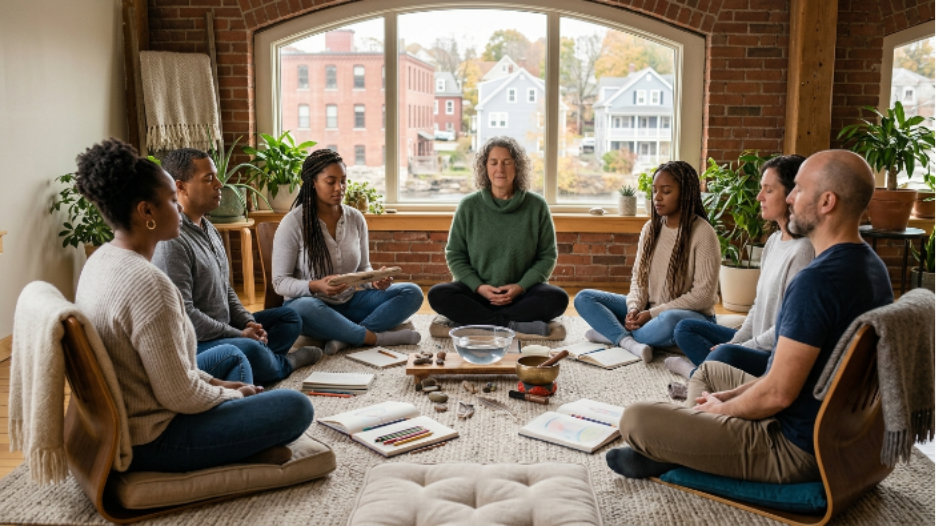
Have you ever felt like you were carrying your struggles completely alone? Many people do. But here's something powerful: healing does not have to happen in isolation. A mindful therapy group creates a shared space where people come together to grow, reflect, and support each other — guided by a trained mental health professional.
Group therapy is one of the most clinically supported and deeply human forms of mental health treatment. Research consistently shows that group-based approaches can be just as effective as individual therapy for conditions like anxiety, depression, trauma, and relationship difficulties.
In this article, you'll learn exactly what a mindful therapy group is, what happens during sessions, the proven benefits of group therapy, popular group therapy activities, and how alternative therapies groups in Massachusetts are changing the way people access mental health care.
What Is a Mindful Therapy Group?
A mindful therapy group is a structured form of psychotherapy where a small group of people — typically 5 to 15 individuals — meet regularly under the guidance of a licensed therapist. Unlike individual therapy, group therapy leverages the healing power of shared experience, mutual support, and collective insight.
The word 'mindful' in this context refers to the integration of mindfulness-based practices into the group process. This means participants are encouraged to be present, non-judgmental, and aware — of themselves and of others in the group.
Mindful therapy groups can address a wide range of challenges, including:
Anxiety and stress management
Depression and low mood
Trauma recovery
Grief and loss
Life transitions and relationship issues
Body image and eating concerns
Athlete mental health and performance anxiety
At Christine Mosher LICSW, the approach to mental health is warm, client-centered, and deeply evidence-based. Whether you are working through a personal challenge or seeking growth, mindful group therapy provides a safe and powerful path forward.
How Mindful Group Therapy Works

Group therapy sessions typically run between 60 and 90 minutes. Groups meet weekly or bi-weekly and are usually closed - meaning the same participants attend throughout the course of treatment. This consistency builds trust and allows deeper therapeutic work to unfold.
A typical mindful therapy group session might follow this structure:
Opening Check-In: Each participant briefly shares how they are feeling. This grounds everyone in the present moment.
Mindfulness Practice: A short breathing exercise, body scan, or guided visualization sets the tone for the session.
Theme or Focus Discussion: The therapist introduces a topic - like managing anxiety, setting boundaries, or processing grief.
Group Sharing and Reflection: Members share their experiences, receive feedback, and offer support to one another.
Skill-Building Activity: Practical tools like journaling, cognitive reframing, or DBT-based exercises are explored.
Closing and Integration: The session ends with a grounding exercise and an opportunity to name one takeaway.
Benefits of Group Therapy
The benefits of group therapy are both wide-ranging and well-documented. Here is why group therapy works so powerfully for so many people:
A 2021 meta-analysis published in the Journal of Consulting and Clinical Psychology found that group therapy produced outcomes equivalent to individual therapy for anxiety and depression - while reaching more people per session. For athlete mental health, group-based support has also shown strong results in reducing burnout and improving mental resilience.
Common Group Therapy Activities
One of the most effective parts of any mindful therapy group is the intentional use of structured group therapy activities. These activities promote insight, skill development, and connection. Here are some of the most commonly used:
1. Mindfulness Meditation
Guided meditations help participants slow down, connect with the present moment, and manage emotional reactivity. Even five minutes of mindful breathing can shift the nervous system out of stress mode.
2. Gratitude Journaling
Group members write and share three things they are grateful for. This simple practice rewires the brain toward positivity and builds emotional resilience over time.
3. Cognitive Reframing Exercises
Participants learn to identify negative thought patterns and replace them with more balanced, realistic perspectives. This is a core CBT-based activity used by many best therapists in Massachusetts.
4. Role-Playing Scenarios
Members practice real-life conversations — like setting a boundary with a coach, discussing anxiety with a parent, or navigating conflict at work — in the safe space of the group.
5. Emotion Regulation Skills (DBT-Based)
Dialectical Behavior Therapy (DBT) activities like TIPP (Temperature, Intense exercise, Paced breathing, Progressive relaxation) give members concrete tools to manage overwhelming emotions.
6. Values Clarification
Participants identify their core values and explore how they can align daily actions with what matters most. This is particularly powerful for athletes navigating identity transitions.
7. Art and Expressive Therapy
Creative expression through drawing, writing, or movement can bypass verbal defenses and help participants access and process deeper emotions.
Alternative Therapies Group in Massachusetts
Massachusetts has become a leader in integrative and holistic mental health care. An alternative therapies group in Massachusetts blends evidence-based psychotherapy with complementary healing approaches to offer a more whole-person experience.
Common alternative and complementary modalities used in group settings include:
Mindfulness-Based Stress Reduction (MBSR): An 8-week structured program that combines meditation and yoga-based movement to reduce stress and anxiety.
Mindfulness-Based Cognitive Therapy (MBCT): Specifically designed to prevent relapse of depression by teaching participants to recognize and disengage from negative thought spirals.
Acceptance and Commitment Therapy (ACT): Helps participants accept difficult feelings rather than fight them, while committing to values-driven action.
Somatic Therapy: Body-based approaches that help people release stored tension, trauma, and stress through movement and breathwork.
Nature-Based Therapy: Some Massachusetts therapists incorporate outdoor group experiences, which research links to reduced cortisol and improved mood.
These alternative therapies group approaches are ideal for individuals who have not found relief through traditional talk therapy alone, or who simply want a more holistic approach to healing.
At Christine Mosher LICSW, evidence-based modalities like CBT, DBT, and mindfulness are integrated into both individual and group-based care. As a licensed mental health professional, Christine draws on her background as a former NCAA Division I athlete to bring a uniquely grounded perspective to all of her work.
Who Should Join a Mindful Therapy Group?
Group therapy is not for everyone — and that is okay. But it can be transformative for the right person at the right time. You might benefit from a mindful therapy group if you:
Feel isolated or misunderstood in your struggles
Want to develop stronger social and communication skills
Are managing anxiety, depression, grief, or life transitions
Are an athlete navigating performance pressure or identity shifts
Want affordable mental health support with high therapeutic value
Are ready to learn from others' experiences as well as your own
Many family therapists in Massachusetts also recommend group therapy as a complement to individual or family work — especially for teenagers and young adults who benefit enormously from peer connection.
Group Therapy vs. Individual Therapy: Which Is Right for You?
Many people find that combining both forms of therapy offers the most complete support. Speak with a therapist to discuss which approach — or combination — is right for your needs.
Key Takeaways
Mindful therapy groups combine the science of group therapy with mindfulness practices to promote healing and growth.
The benefits of group therapy include reduced isolation, improved social skills, and real-world accountability.
Structured group therapy activities like mindfulness, CBT exercises, and role-playing build lasting mental health skills.
Massachusetts offers excellent alternative therapies group options that blend evidence-based and holistic approaches.
Group therapy can be used alone or alongside individual or family therapy for comprehensive care.
Frequently Asked Questions (FAQs)
-
A mindful therapy group is a structured form of group psychotherapy that incorporates mindfulness practices. Members meet regularly with a licensed therapist to share experiences, develop mental health skills, and support one another in a non-judgmental environment.
-
Yes. Research supports the effectiveness of mindfulness-based and integrative group therapies for anxiety, depression, stress, and trauma. Massachusetts has a strong network of therapists trained in these approaches.
-
Common activities include mindfulness meditation, gratitude journaling, cognitive reframing, DBT skill-building, role-playing, and values clarification. The specific activities vary based on the group's focus and members' goals.
-
Absolutely. Athletes benefit greatly from group therapy, especially groups focused on performance anxiety, identity, and mental resilience. Christine Mosher LICSW offers specialized support for athlete mental health including group-based approaches.
-
The best first step is to speak with a licensed therapist who can assess your needs and goals. Many people find group therapy most helpful when they want peer connection, skill-building, or an affordable alternative to individual therapy.